

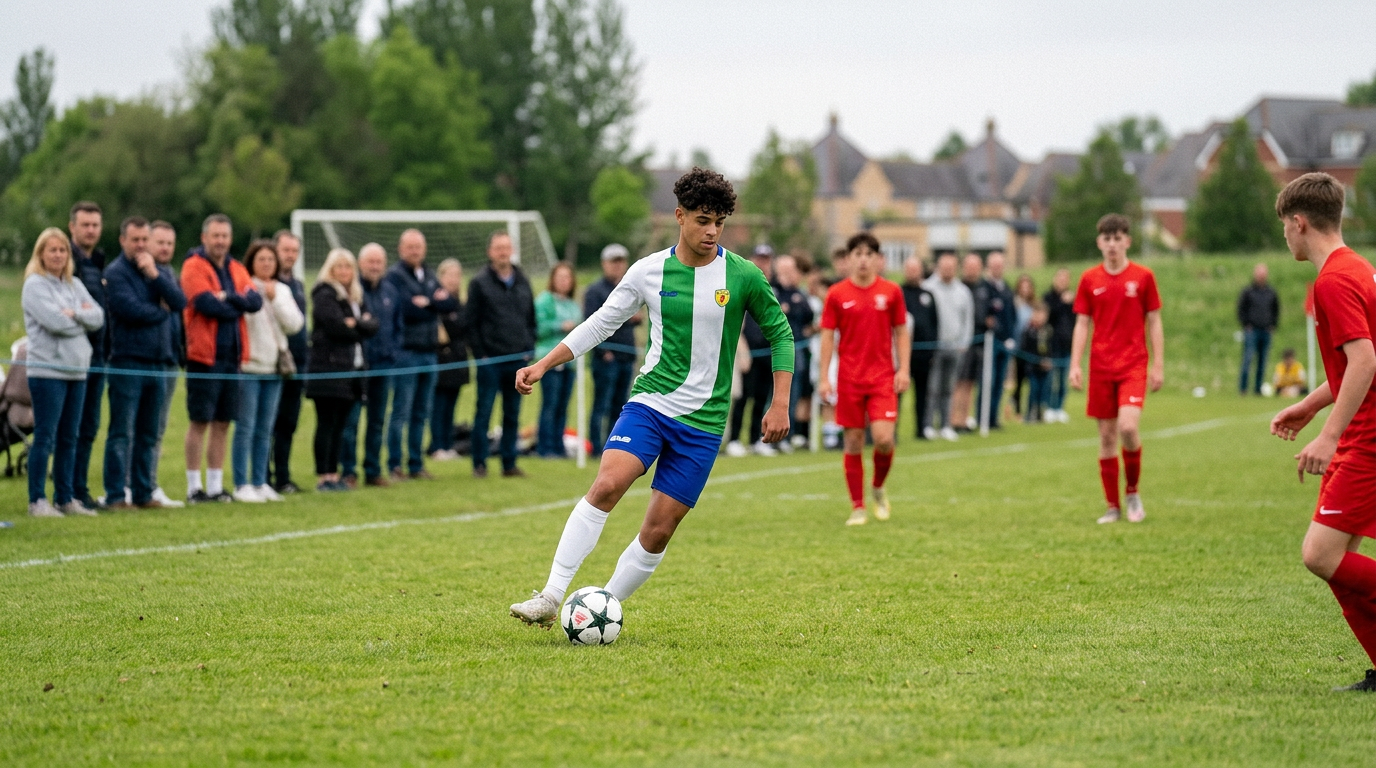

Getting better at football isn’t usually about one big breakthrough, it’s about small, specific habits, repeated consistently.
This article answers some of the most common questions players ask about improving, building confidence, and standing out, in line with JBFC Football’s #LoveTheBall approach: spend time with the ball, enjoy the process, and the progress follows.
How can I improve my first touch?
A good first touch isn’t something you’re born with, it’s built through repetition. The calmest players on the ball aren’t always the most talented; they’re usually the ones who’ve practised the most. Cushioning the ball, keeping it close, and using both feet matters more than learning flashy moves. Find a wall, and spend ten minutes passing and controlling with both feet, a few times a week — that simple habit makes a bigger difference than it seems.
How do I actually get better at dribbling?
Dribbling isn’t really about learning lots of tricks. Copying stepovers, flicks and rainbows from videos often doesn’t translate to a real game. Good dribbling starts with keeping the ball close and your head up, so you can actually see what’s around you — the fancier moves only work once that foundation is solid. Try dribbling through cones without looking down once; that’s the skill that wins you space on matchday, not the trick itself.
How do I get more confident on the ball under pressure?
Confidence under pressure is built, not born. Many players freeze the moment a defender closes in, simply because they rarely face real pressure in training. Practising in situations that feel slightly uncomfortable — someone actually trying to win the ball off you — makes the real thing feel familiar rather than frightening. Ask your coach or a teammate for a few minutes of 1v1 practice this week; the more pressure you feel in training, the less it bothers you in a match.
What should I do when I keep making mistakes in a game?
Making the same mistake repeatedly usually means you’re attempting something genuinely useful. Playing it safe after a mistake feels protective, but it slows learning. Mistakes are simply information. Players who improve fastest aren’t the ones who never lose the ball; they’re the ones who keep trying the same difficult thing until it clicks. Next time the situation comes up in a match, try it again rather than avoiding it.
Why do I play well in training but freeze in matches?
This is extremely common, and there’s a clear reason. Training feels safe, fewer people watching, less at stake, so you relax and play naturally. Matches feel different because there’s real pressure: parents watching, a scoreline, eyes on you. That pressure can shrink decision-making if you’re not used to it. Before kickoff, remind yourself it’s the same ball and the same skills, just a different shirt. The more matches you play, the smaller that gap becomes.
What can I practise alone for 20 minutes?
Proper practice doesn’t need a coach, cones, or a plan, some of the best improvement happens completely alone. Try splitting 20 minutes into four parts: five minutes passing with your weaker foot, five minutes juggling, five minutes dribbling around anything you can find, and five minutes shooting at a target. No excuses needed , just you, a ball, and a bit of space. If you’re lucky enough to have a access to a good wall, or a rebounder, then that can help level up training on your own.
How long does it actually take to get noticeably better?
Often faster than players expect, but only with the right kind of practice. Training for months without a clear focus can feel like nothing’s changing, leading players to assume they’ve hit a ceiling. Real improvement tends to show up within weeks when you focus on one specific thing on purpose, rather than just kicking a ball around generally. Pick the skill that costs you the most in games, and focus only on that for a month.
Should I stick to one position, or learn to play several?
At a young age, trying several positions is far more valuable than settling into one. It’s tempting to call yourself “a striker” or “a defender” early because it feels comfortable, but playing different positions teaches you the whole game — what defenders see, what strikers need, how midfielders think. That understanding makes you better wherever you eventually end up. Next time your coach suggests a new position, say yes. And many players might believe they are one position, but are actually more effective elsewhere.
What’s the difference between grassroots and academy football?
Less than many players assume, especially early on. Academy football centres on developing players in line with the club’s ethos, to help them to compete in a professional pathway that most players, even talented ones, won’t take. Grassroots football is about learning, playing and enjoying the game, and plenty of excellent players come through it. Wherever you play, the things that actually make you better are the same: touches on the ball, enjoying training, and turning up consistently, working hard, dedication and being a good team player. Although academy level will more often than not provide players with regular training that is planned around the development needs of the players.
How do I get picked for the team, or get more game time?
It’s rarely just about raw ability. Coaches notice effort, attitude, listening and consistency just as much as skill, often more. A reliable, easy-to-coach player who wants to do right for the team frequently gets picked ahead of a gifted but inconsistent one. This week, try focusing on being the player your coach can always count on, rather than simply the most skilful one in the group, and see what happens to your game time.
What should I do if I’m smaller than everyone else?
Being smaller isn’t the disadvantage it can feel like. Some of the best players in the world weren’t the biggest kid in their group, they simply had better touch and sharper thinking. Size differences even out over time as players grow at different rates; skill and awareness don’t disappear in the meantime. Focus your energy on your touch and your awareness of the game, qualities that size can never take away from you.
How do I stand out to a coach?
Standing out isn’t always about the flashiest skill or the most goals in training. Coaches notice effort, listening, and attitude just as much as ability, often more. The player who tries hardest, every single session, and who wants to keep learning and improving tends to be the one a coach remembers. This week, focus on being the player who listens best and works hardest in every drill, not just the one who looks best doing tricks.
How do I improve my “football IQ”?
Better football understanding doesn’t always come from more drills, it comes from watching more, too. Many players only think about the game while they’re actually playing it. Watching matches and following where players move when they don’t have the ball teaches how things like decision-making, awareness, running off the ball, and positioning are important. Next time you watch a game, pick one player and follow their movement off the ball for ten minutes, you’ll learn more than you’d expect.
Want more like this?
Getting better at football is built from small, consistent habits like these, repeated over weeks and months — not one big breakthrough. Follow JBFC Football for more tips for players, and remember: #LoveTheBall.
Want more like this?
Every one of these moments – the car ride home, the sideline, the quiet conversation about playing time – shapes how your child feels about football for years to come.
At JBFC Football, our #LoveTheBall philosophy exists to help children fall in love with the game, at their own pace, in a pressure-free, inclusive environment.
Follow JBFC Football for more advice like this, and get in touch if your son or daughter would like to get involved in our Saturday Club sessions in Great Horkesley, Colchester, or learn in a more focused environment with us. #LoveTheBall