
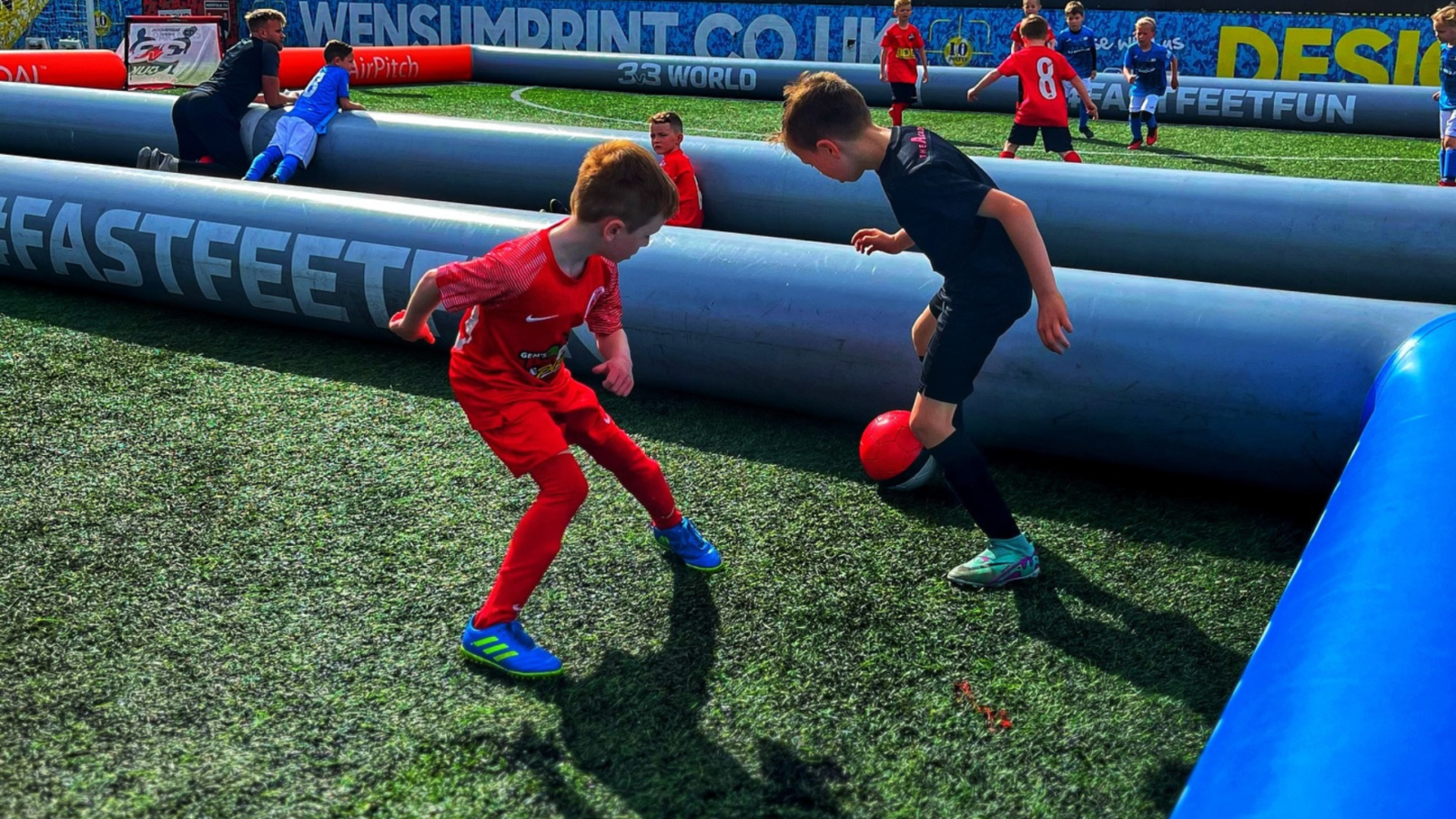

The Future Fit initiative from the The Football Association (FA) is set to introduce one of the most significant changes to grassroots youth football in decades. From the 2026/27 season, the FA will introduce 3v3 football as the official entry format for Under-7 players across England.
For many coaches, parents and clubs, this raises important questions. What are the new FA 3v3 rules? Why is the change happening? And how can grassroots clubs prepare for it?
This guide explains the Future Fit football changes, the benefits of the 3v3 format, and how clubs can get ready.
Why the FA Is Introducing 3v3 Football
The FA’s Future Fit strategy is designed to increase player engagement and technical development in the early stages of youth football.
Research from youth academies and sports science studies consistently shows that smaller-sided games significantly increase player involvement. In formats such as 3v3:
- Players touch the ball more frequently
- Players make more decisions
- Players experience more 1v1 situations
- Players stay physically active for longer periods
Studies have shown that players in small-sided formats like 3v3 can experience up to twice as many ball involvements compared with larger formats such as 7v7.
By increasing engagement and repetition, the FA hopes to help young players develop technical skills, confidence and creativity earlier in their football journey.
What Are the New FA 3v3 Rules?
The new entry-level format for Under-7s will include several key features designed to maximise player involvement:
- 3 players vs 3 players
- No goalkeepers
- Small pitch size (approximately 10m x 15m)
- No referees – games supervised by adults
- No league tables or recorded results
The smaller pitch means that up to four 3v3 games can fit into a traditional 5v5 pitch space, allowing more children to play at the same time.
The focus is on learning and enjoyment rather than competition.
The Benefits of 3v3 Youth Football
More Touches and Technical Development
Because there are fewer players on the pitch, each child gets more opportunities to dribble, pass, receive and shoot. These repetitions are essential for developing technical ability at young ages.
Improved Decision Making
3v3 games create frequent attacking and defending situations. Players must constantly adapt and make quick decisions, helping develop football intelligence.
Physical Development
Small-sided games naturally improve agility, balance, coordination and speed. Players are rarely standing still, meaning they stay active throughout the game.
Increased Confidence and Enjoyment
More involvement leads to greater enjoyment. Children feel part of the game and gain confidence through frequent opportunities to contribute.
Common Questions from Coaches and Parents
Where Will All the 3v3 Pitches Fit?
Many clubs worry about space, but the smaller pitch size means multiple games can be played simultaneously. Clubs may adopt festival-style match days to maximise pitch usage.
What About Goalkeepers?
At younger ages, most coach education programmes recommend delaying position specialisation. The focus is on developing all-round football skills before introducing goalkeeper roles later.
Will Children Learn the Rules Without Referees?
Games are supervised by adults, but players are encouraged to take responsibility for decisions. This helps develop communication, honesty and respect for the game.
Is 3v3 Really a Match?
While it may look different from traditional formats, 3v3 is widely used in professional academies and development programmes because it accelerates learning.
How Clubs and Coaches Can Prepare
With the full rollout beginning in 2026, grassroots clubs can start preparing now by:
- Introducing 3v3 games in training sessions
- Organising small-sided festivals or club tournaments
- Using smaller pitches and mini goals
- Encouraging creativity and decision-making during games
Getting familiar with the format early will help coaches and players feel comfortable when the official rollout begins.
Where to Find More Information
Clubs looking for guidance on the new format can explore resources from:
- The Football Association (FA) and England Football Learning platforms
- 3v3 UK, a leading organisation promoting the 3v3 format across the country
Learning More About the 3v3 Format
Coaches who want practical ideas on how to implement 3v3 in training and match environments can explore the Power of 3v3 online coaching course developed by MiMentor in collaboration with 3v3 UK.
The course covers:
- Why 3v3 accelerates player development
- Core two-player and three-player moves
- Game constraints to improve learning
- Ideas for integrating 3v3 into club programmes
As the Future Fit changes approach, understanding how to use the 3v3 format effectively will help coaches support the next generation of players.
Final Thoughts
The introduction of 3v3 football represents an exciting shift toward a more player-centred approach to grassroots development.
By increasing touches, decisions and involvement, the format aims to help young players develop stronger skills, greater confidence and a lifelong love of football.
For coaches, clubs and parents, embracing these changes early could make a huge difference to how young players experience the game.